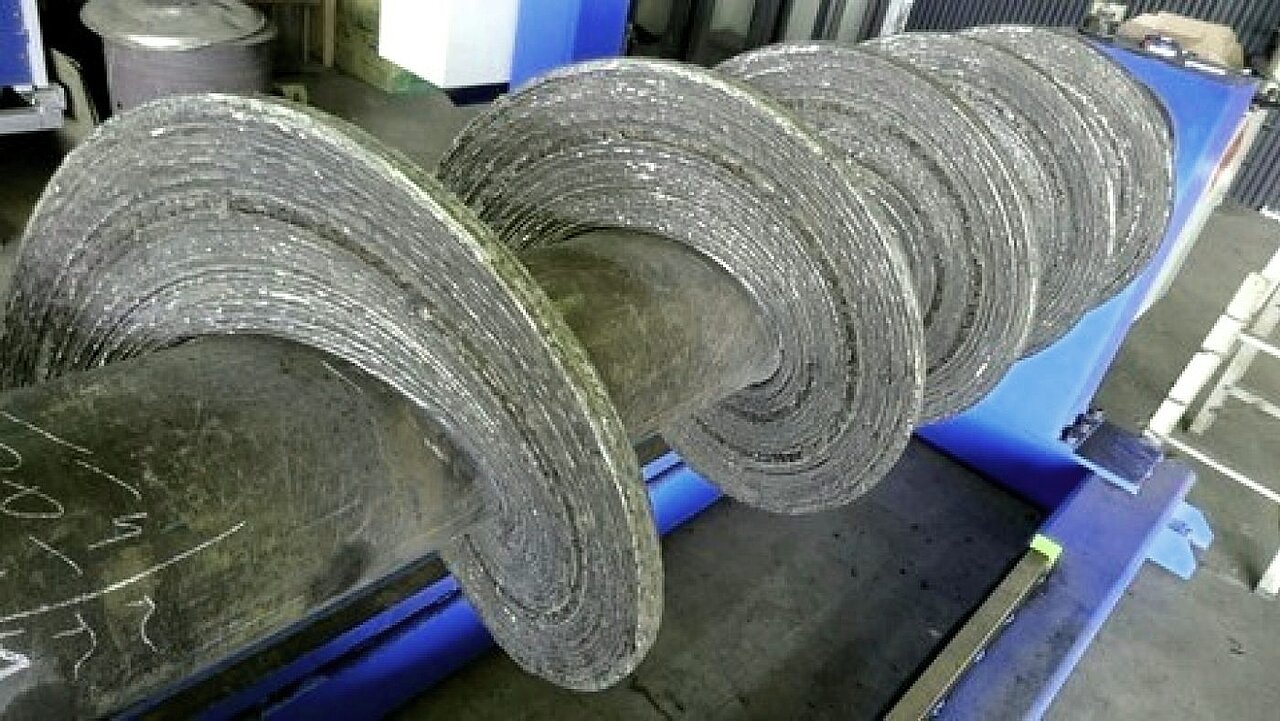
What Is Laser Cladding?

Laser cladding is an advanced additive manufacturing process that enhances or repairs the surface of a component by applying a high-powered laser to fuse a metallic coating onto a substrate.

The Laser Cladding process uses a laser beam to form a melt pool on a metallic substrate. Metal powder or metal wire is injected directly into the melt pool, and the deposited metal then cools in a controlled and consistent pattern, creating a full metallurgical bond with the substrate with minimal to no dilution. This process is also referred to as Directed Energy Deposition (DED) process.

This method improves wear resistance, corrosion protection, and overall performance by creating a metallurgically bonded layer with minimal dilution. Unlike traditional welding or thermal spray coatings, laser cladding delivers precision, reduced heat input, a metallurgically bonded layer that does not chip or peel and exhibit superior material properties.
Industries such as aerospace, energy, mining and heavy machinery rely on laser cladding to extend component life, reduce downtime, and optimize performance.

PhotonWeld Laser cladding with wire leverages cutting-edge laser technology for high-quality, durable results.

The primary application of this technology is in two areas:

  • Enhancing the component life – by hardfacing or corrosion resistant material deposition

  • Repair and Remanufacturing components to extend the life of component by Overlay Welding

Our low-heat wire laser cladding process enables the deposition of coatings with unique properties such as high hardness, high toughness, wear resistance, and corrosion resistance on a variety of substrates causing minimal impact to metallurgical integrity of the substrate.

Our laser cladding offers ultra-low dilution with the base material and ensures excellent retention of coating material properties.

Overlay welding and hard facing are two commonly used techniques in the industry for improving the durability and wear resistance of components subjected to harsh operating conditions. While both processes aim to enhance the surface properties of a material, there are distinct differences in their application, materials used, and the resulting properties.