

Mastering Brass Joining - Mastering Brass Laser Welding
PhotonWeld Laser welders provide a powerful solution for welding brass
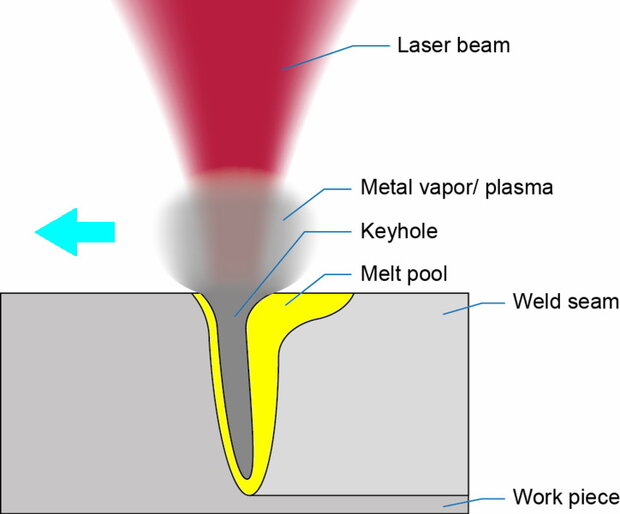
Understanding Laser Behavior on Brass Surfaces
Laser welding brass requires not only power and precision but also an understanding of how the laser beam interacts with the material’s surface. Brass presents unique challenges due to its reflectivity, variable zinc content, and tendency toward rapid heat conduction. These factors influence how energy is absorbed, how the molten pool behaves, and ultimately, the quality of the weld. By understanding the physical and chemical dynamics at play during laser welding, operators can control and stabilize the process to achieve consistent, high-quality results.
Initiation Phase: Overcoming Reflectivity
Brass has a high reflectivity, especially toward infrared wavelengths used in most industrial laser systems. During the initial stage of welding, a significant portion of the laser energy is reflected instead of absorbed, making it difficult to start melting the surface. This reflectivity can exceed 70% at room temperature, meaning only a fraction of the beam energy contributes to heating. Once the surface reaches its melting point, however, its reflectivity decreases sharply, allowing for better energy absorption. Strategies to overcome this challenge include using slightly roughened or coated surfaces, adjusting the focal position for higher intensity, or preheating the material to improve absorption.
Keyhole Formation and Stability
Once melting begins, a “keyhole” forms—a narrow vapor cavity within the molten pool that allows deeper laser penetration. Maintaining a stable keyhole is critical for consistent weld quality. In brass, the volatility of zinc complicates this phase. Rapid zinc vaporization can cause pressure fluctuations that destabilize the keyhole, leading to spatter, porosity, or even blowouts. Controlling laser power density, pulse frequency, and travel speed helps manage this delicate balance. Modern laser welding systems use high-speed feedback controls to stabilize the keyhole, keeping it uniform and preventing sudden collapse or oscillation.

Laser welding has become one of the most efficient and precise methods for joining metals, and when it comes to brass, it offers distinct advantages over traditional techniques like TIG or MIG welding.
Among the many metals used in industry, brass presents both opportunities and challenges. Brass—a copper-zinc alloy prized for its strength, corrosion resistance, and aesthetic appeal—is widely used in industries ranging from electronics and plumbing to decorative manufacturing. However, welding brass presents unique challenges due to its high thermal conductivity, low melting point, and zinc’s tendency to evaporate under intense heat, which can cause porosity and weaken the joint. Brass offers outstanding electrical and thermal conductivity, corrosion resistance, and aesthetic appeal. These properties make it invaluable in electrical connectors, plumbing fittings, heat exchangers, and decorative applications. Yet these same traits also make it notoriously difficult to weld. Its high reflectivity to infrared light and the volatility of zinc complicate heat management and energy absorption.
Laser welding, however, provides a modern and powerfull solution to many of these difficulties. Through careful control of wavelength, pulse energy, shielding gas, and beam focus, it is possible to produce strong, precise, and visually appealing welds in brass. By focusing a high-energy beam on a small, controlled area, it minimizes heat input, reduces zinc loss, and produces clean, precise welds with minimal distortion. Modern laser welding systems, like our PhotonWeld Series, including continuous and pulsed lasers, allow for tight control over parameters like power, pulse duration, and beam focus—making it possible to achieve strong, high-quality welds even on thin or delicate brass components.
However, welding brass presents unique challenges due to its high thermal conductivity, low melting point, and zinc’s tendency to evaporate under intense heat, which can cause porosity and weaken the joint.
Why Laser Welding Brass Works Better Than Any Other Method?
Laser welding has become the preferred technique for joining brass components because it overcomes the challenges that make conventional welding methods inefficient or unreliable. Traditional processes like TIG, MIG, and resistance welding often struggle with brass’s high thermal conductivity, reflectivity, and the volatility of zinc, which can lead to porosity, oxidation, and uneven joints. Laser welding, on the other hand, delivers concentrated energy precisely where it’s needed, ensuring superior weld quality, minimal deformation, and higher production efficiency.
High-Speed Welding Produces Cleaner Seams
Laser welding enables extremely fast welding speeds while maintaining precise control over energy input. The process minimizes the size of the molten pool, reducing oxidation, spatter, and thermal damage. Faster travel speeds also prevent excessive zinc evaporation and allow for rapid cooling, resulting in bright, uniform seams with smooth surfaces. These clean, consistent welds improve not only the visual appearance but also the structural integrity of the brass joint.
Narrow Heat-Affected Zone Reduces Distortion and Color Change
Because laser welding introduces heat with pinpoint precision, the thermal impact on surrounding material is minimal. This narrow heat-affected zone (HAZ) limits warping, preserves dimensional accuracy, and reduces oxidation and discoloration—common problems when welding decorative or tight-tolerance brass parts. The result is a cleaner, more stable weld that often requires little or no post-processing, making the process ideal for both functional and aesthetic applications.
High Penetration Capabilities
Laser beams have an exceptionally high energy density that allows them to penetrate deeply into brass despite its reflective surface and high thermal conductivity. This makes it possible to weld thicker sections or complex joints that would be difficult or impossible using other techniques. The depth-to-width ratio of laser welds is also superior, producing narrow, strong seams with minimal material input. Advanced laser systems can further adjust beam parameters in real time to maintain consistent penetration across varying geometries.
Instantaneous Energy Delivery Reduces Zinc Boiling
Zinc’s low boiling point (907℃) makes it prone to vaporization during conventional welding, creating pores and weak spots. Laser welding addresses this by delivering energy in an extremely localized and instantaneous manner. The intense, focused laser beam melts the brass rapidly, allowing fusion to occur before significant zinc evaporation takes place. By fine-tuning power and pulse parameters, operators can stabilize the molten pool, reduce fume generation, and achieve smooth, dense welds without porosity or spatter.

Understanding Brass as a Material
Before tackling the specifics of laser welding, it’s crucial to understand what brass is and how it behaves under heat and light. Brass is not a single substance but a family of copper-zinc alloys with widely varying compositions and physical characteristics. These variations directly influence weldability, making metallurgical understanding the foundation for process optimization.
Understanding Brass as a Welding Material
Brass is a versatile copper-based alloy primarily composed of copper (Cu) and zinc (Zn), with optional additions of elements like lead, tin, or aluminum to enhance specific properties. Its wide range of compositions gives brass a balance of strength, ductility, and corrosion resistance, making it an attractive material for applications in plumbing, electrical connectors, musical instruments, and precision components. However, these same compositional variations directly affect how brass behaves during welding—especially with high-energy processes like laser welding.
Composition and Alloying Elements
Brass consists primarily of copper (Cu) and zinc (Zn), but the ratio between these two elements greatly affects the alloy’s structure and mechanical properties. The copper content in brass typically ranges from 55% to 95%, with zinc making up the balance. The higher the zinc content, the more the alloy tends toward yellow coloration and improved machinability—but at the expense of weldability. Zinc has a significantly lower boiling point (907℃) than copper (1085℃), meaning it vaporizes rapidly under laser heat. This vaporization can cause porosity, spatter, and uneven penetration if not properly controlled. Zinc content usually ranges between 5% and 40%.
- Alpha brasses (less than ~35% Zn) are single-phase alloys with a face-centered cubic (FCC) structure. They are highly ductile, easy to form, and relatively easy to weld.
- Alpha-beta brasses (35–45% Zn) contain both the alpha and beta phases. The beta phase adds strength but makes the material less ductile and more sensitive to thermal stress during welding.
Additional elements are sometimes introduced:
- Lead (Pb) improves machinability but creates low-melting inclusions that can promote cracking under thermal stress.
- Tin (Sn) enhances corrosion resistance.
- Aluminum (Al) and silicon (Si) improve strength and surface quality.
Each element alters the alloy’s response to laser energy and heat.
Effect of Zinc Content on Weldability
Brasses with lower zinc content (such as red brass or cartridge brass) generally exhibit better laser weldability because there is less risk of zinc vaporization and associated defects. Alloys with more than 35% zinc, such as yellow brass, are more prone to porosity, surface contamination, and weakened joints unless the laser parameters are finely tuned. Preheating, protective gas shielding, and precise beam control can help mitigate these challenges. Brass’s weldability depends strongly on its zinc content and secondary alloying elements. Lower-zinc brasses are easier to weld, while high-zinc or leaded brasses require careful thermal control. Understanding the composition ensures appropriate parameter selection and helps prevent common defects like cracking or porosity. Knowledge of the to weld alloy composition is the first step toward consistent laser welding success.
Physical and Thermal Properties of brass
Brass’s high conductivity and narrow melting range make it sensitive to laser energy fluctuations
Thermal Properties
Brass’s high thermal conductivity, inherited from its copper base, causes rapid heat dissipation away from the weld zone. While this reduces distortion, it also demands higher laser power to achieve full penetration. Its strong reflectivity to infrared laser wavelengths (especially with fiber lasers) can further reduce absorption efficiency, making initial energy coupling difficult. The melting point of brass varies depending on composition but typically ranges from 900℃ to 940℃—relatively low compared to pure copper, yet still requiring careful balance between sufficient energy input and zinc vapor control.Brass’s physical and thermal properties define its response to concentrated laser energy. High conductivity and a wide melting range make it a good heat conductor — and a difficult material to melt uniformly.
The thermal conductivity of brass ranges from 100 to 150 W/m·K, roughly three times that of steel. This high conductivity rapidly dissipates heat away from the weld zone, often requiring higher laser power or reduced welding speed to achieve full penetration.
The melting point of brass depends on zinc content, generally between 900℃ and 940℃. Because zinc boils at 907℃, it begins to vaporize as the alloy nears its melting range. This boiling effect can eject molten droplets, form pores, and alter composition near the weld.
The thermal expansion coefficient of brass (approximately 20 × 10⁻⁶ /K) causes significant expansion and contraction under heat, which can lead to residual stress and warping if not managed through fixturing or balanced heat input.
Brass’s high conductivity and narrow melting range make it sensitive to laser energy fluctuations. Controlling heat input is vital to prevent porosity, distortion, and zinc loss during welding.

Copper is not impossible to weld with a laser. In fact, our Master-Pro Series are widely used for copper components in automotive, electronics, and energy industries.
The challenge is that copper requires better control of laser energy compared with many other metals. But our machines can handle it with ease!
1. High Reflectivity Reduces Laser Energy Absorption
One of the biggest challenges in copper laser welding is its high reflectivity.
Most industrial fiber laser welding systems use infrared wavelengths around 1030–1070nm. Copper reflects a large amount of this laser energy before melting begins.
This can cause:
Difficult welding initiation
Unstable energy absorption
Inconsistent penetration
Increased welding defects
For manufacturers, this means simply increasing laser power is not always the best solution.
A successful copper welding process requires:
Stable laser output
Optimized welding speed
Proper focus position
Suitable beam control technology
Modern fiber laser welding systems improve copper processing by precisely controlling energy delivery and welding parameters.
2. High Thermal Conductivity Makes Heat Control More Difficult
Copper is one of the best thermal conductors among industrial metals.
While this makes copper valuable for electrical and heat transfer applications, it also creates challenges during laser welding.
When laser energy is applied to copper, heat quickly spreads away from the welding area.
This may result in:
Reduced welding efficiency
Difficulty maintaining a stable molten pool
Increased energy requirements
Therefore, copper welding requires accurate control of:
Laser power
Welding speed
Beam diameter
Heat input
A well-designed laser welding machine can help maintain stable welding conditions and reduce unnecessary heat impact on surrounding areas
3. Narrow Processing Window Requires Precise Welding Control
Copper has a relatively small temperature range between melting and boiling.
If laser energy is too low:
The material may not fully melt
Penetration may be insufficient
Weld strength may decrease
If laser energy is too high:
Metal vapor increases
Spatter may occur
Weld quality may become unstable
Because of this, choosing the correct laser welding system is critical.
Understanding Brass as a Welding Material
Brass is a versatile copper-based alloy primarily composed of copper (Cu) and zinc (Zn), with optional additions of elements like lead, tin, or aluminum to enhance specific properties.
The wide range of compositions gives brass a balance of strength, ductility, and corrosion resistance, making it an attractive material for applications in plumbing, electrical connectors, musical instruments, and precision components. However, these same compositional variations directly affect how brass behaves during welding—especially with high-energy processes like laser welding.
Composition of Brass
The copper content in brass typically ranges from 55% to 95%, with zinc making up the balance. The higher the zinc content, the more the alloy tends toward yellow coloration and improved machinability—but at the expense of weldability. Zinc has a significantly lower boiling point (907℃) than copper (1085℃), meaning it vaporizes rapidly under laser heat. This vaporization can cause porosity, spatter, and uneven penetration if not properly controlled.
Effect of Zinc Content on Weldability
Brasses with lower zinc content (such as red brass or cartridge brass) generally exhibit better laser weldability because there is less risk of zinc vaporization and associated defects. Alloys with more than 35% zinc, such as yellow brass, are more prone to porosity, surface contamination, and weakened joints unless the laser parameters are finely tuned. Preheating, protective gas shielding, and precise beam control can help mitigate these challenges.
Thermal Properties
Brass’s high thermal conductivity, inherited from its copper base, causes rapid heat dissipation away from the weld zone. While this reduces distortion, it also demands higher laser power to achieve full penetration. Its strong reflectivity to infrared laser wavelengths (especially with fiber lasers) can further reduce absorption efficiency, making initial energy coupling difficult. The melting point of brass varies depending on composition but typically ranges from 900℃ to 940℃—relatively low compared to pure copper, yet still requiring careful balance between sufficient energy input and zinc vapor control.
Influence of Brass Grades on Weld Performance
Different brass grades respond distinctly to laser welding. For instance, C260 (cartridge brass, 70% Cu, 30% Zn) offers good weldability and strength, while C360 (free-cutting brass with lead) tends to form inclusions and porosity due to lead evaporation. High-zinc grades like C280 (Muntz metal) are more challenging to weld without defects. Selecting the right grade for laser welding depends on the intended mechanical requirements and the available process controls.
Common Brass Alloys Used in Laser Welding
In practice, cartridge brass (C260), naval brass (C464, containing tin for corrosion resistance), and silicon-modified brasses are among the preferred alloys for laser welding due to their stable behavior and relatively low zinc content. These alloys offer a balance of weld quality, mechanical strength, and resistance to post-weld corrosion.
In short, successful laser welding of brass requires a deep understanding of its composition and thermal characteristics. Zinc content plays the most critical role, influencing not only weldability but also the type and severity of defects that may occur. By selecting suitable brass grades and optimizing parameters to control heat input and vaporization, manufacturers can achieve precise, strong, and visually clean welds that fully leverage the advantages of laser technology.
Influence of Brass Grades on Weld Performance
Different brass grades respond distinctly to laser welding. For instance, C260 (cartridge brass, 70% Cu, 30% Zn) offers good weldability and strength, while C360 (free-cutting brass with lead) tends to form inclusions and porosity due to lead evaporation. High-zinc grades like C280 (Muntz metal) are more challenging to weld without defects. Selecting the right grade for laser welding depends on the intended mechanical requirements and the available process controls.
Common Brass Alloys Used in Laser Welding
In practice, cartridge brass (C260), naval brass (C464, containing tin for corrosion resistance), and silicon-modified brasses are among the preferred alloys for laser welding due to their stable behavior and relatively low zinc content. These alloys offer a balance of weld quality, mechanical strength, and resistance to post-weld corrosion.
In short, successful laser welding of brass requires a deep understanding of its composition and thermal characteristics. Zinc content plays the most critical role, influencing not only weldability but also the type and severity of defects that may occur. By selecting suitable brass grades and optimizing parameters to control heat input and vaporization, manufacturers can achieve precise, strong, and visually clean welds that fully leverage the advantages of laser technology.

Post-Weld Treatment for Brass
Post-weld treatment for brass is more than a cosmetic step—it’s a vital process for ensuring mechanical stability, corrosion resistance, and visual uniformity.
Post-weld treatment is the final but also the most crucial stage in achieving high-quality, durable, and visually appealing brass welds. Even when the welding process is well-optimized, post-weld care ensures that the joint maintains its structural integrity, resists corrosion, and matches the surrounding material aesthetically. Brass, being sensitive to oxidation and thermal stress, benefits from carefully managed cooling, cleaning, and finishing processes. Proper post-weld treatment transforms a technically sound weld into a finished product ready for industrial, architectural, or decorative use.
Cooling Techniques
Controlled cooling is essential in laser welding brass due to its high thermal conductivity and potential for stress buildup. Rapid cooling can create internal stresses, promote cracking, or distort thin sections. Conversely, excessively slow cooling may allow zinc-rich areas to segregate, leading to surface discoloration or microstructural weakness. The best approach is natural air cooling under controlled conditions—avoiding forced cooling with compressed air or water sprays that can induce thermal shock. For thicker or high-precision parts, post-weld temperature equalization (holding the part at 100–150℃ for a short period) allows residual stresses to dissipate gradually. Maintaining even cooling across the component minimizes distortion and preserves dimensional accuracy.
Cleaning the Weld
Immediately after welding, cleaning is necessary to remove surface residues such as oxide films, spatter, and possible zinc vapor deposits. Brass readily forms a thin oxide layer when exposed to air at welding temperatures, which can dull the surface and affect subsequent finishing operations. The cleaning process typically begins with gentle mechanical removal using a fine stainless-steel brush or non-abrasive pad. For more stubborn oxidation, mild acid pickling solutions—such as citric acid or a diluted ammonia-based cleaner—can effectively restore the metal’s natural luster. It is important to rinse and neutralize the surface afterward to prevent chemical staining. Ultrasonic cleaning may also be used for delicate or complex geometries, ensuring thorough residue removal without scratching.
Stress Relief
Residual stresses often remain in welded brass components due to localized heating and rapid solidification. These stresses can lead to warping, cracking, or long-term dimensional instability, especially in assemblies that undergo machining or mechanical loading. Stress relief treatments help normalize the internal structure and stabilize the component. For brass, a mild thermal stress-relief process is typically sufficient—holding the material at 250–300℃ for about one hour, followed by slow cooling in still air. This gentle reheating relieves built-up tension without altering the material’s mechanical or aesthetic properties. For precision or load-bearing parts, stress relief is highly recommended before final finishing or assembly.
Surface Finishing
Laser-welded brass often requires surface finishing to match the appearance of the surrounding material or to enhance corrosion resistance. The type of finishing depends on the application.
- Polishing restores the bright, reflective surface typical of brass, removing minor surface marks and heat tint from welding. Progressive polishing with fine abrasives or buffing compounds yields a smooth, mirror-like finish suitable for decorative or architectural components.
- Brushing gives a more matte, textured look while concealing minor surface irregularities. It is achieved using fine abrasive belts or wire brushes and is often preferred for industrial parts where glare reduction or fingerprint resistance is desired.
- Plating—such as nickel or chrome plating—is used when enhanced corrosion protection or specific visual appearance is required. Before plating, the weld surface must be thoroughly cleaned and smoothed to ensure uniform adhesion. Plating also helps blend welded areas with the parent metal, making the joint nearly invisible.
In high-end applications, a final protective coating (like lacquer or clear powder coat) can be applied to maintain the finish and prevent tarnishing.
Post-weld treatment for brass is more than a cosmetic step—it’s a vital process for ensuring mechanical stability, corrosion resistance, and visual uniformity. Controlled cooling prevents cracking and distortion; cleaning removes oxides and vapor residues; stress relief stabilizes the structure; and surface finishing enhances both function and appearance. Whether the goal is a polished decorative finish or a durable industrial joint, each step contributes to extending the life and quality of the weld. With proper post-weld care, laser-welded brass components can achieve both the technical performance and aesthetic excellence demanded by modern applications.