


A gradual power drop leads to inconsistent cuts, longer cycle times, and eventually a failed module.
PhotonWeld-Pro series Solved this huge problem by inventing the auto calibration!
A gradual power drop, slowly but steady and almost invisible in the beginning, is one of the most common issues fiber laser users face — and it's rarely something you should ignore.
Left unchecked, it leads to inconsistent cuts, longer cycle times, and eventually a failed module.
Most power-drop cases trace back to the optical module: contaminated end caps, damaged fiber connections, pump diode degradation, or thermal issues inside the source.
PhotonWeld-Pro series Solved this huge problem by inventing the auto calibration!
Forget about EN 50504 welding machine calibration
The first welding machine that does not need calibration!!
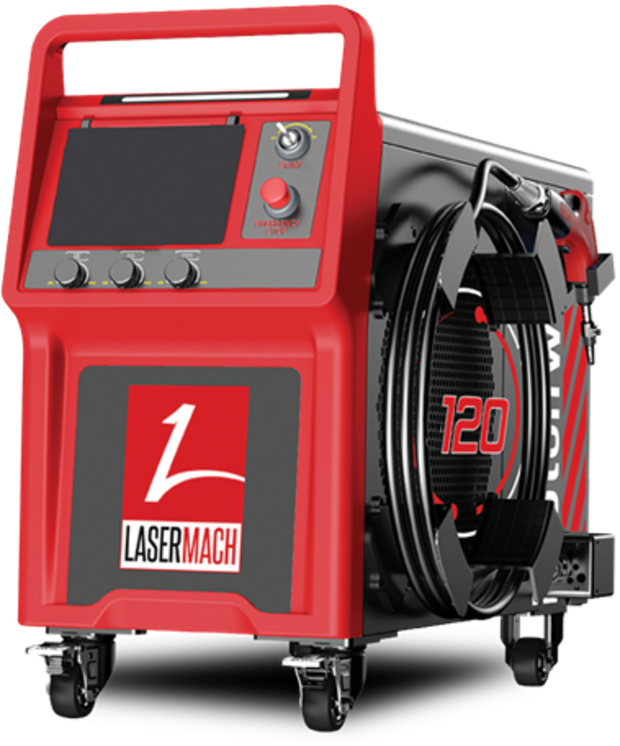
World's First Self-healing laser welding machine
Auto calibration of your welding machine
For professionals in the metal fabrication industry, it’s crucial to ensure that all welding machinery operates at peak performance and consistently produce reliable welding results throughout their operational lifespan.
The power attenuation of laser welding machines is a common problem during longer-term use. To solve this problem, Lasermach has introduced power self-healing technology. This auto-calibration technology can monitor the power output of the laser in real time and automatically perform power repairs on a regular basis to ensure stable power during welding process and avoid fluctuations affecting welding quality. This innovative design not only improves the reliability and stability of the equipment, but also extends its service life.
The industrial-grade design of the laser's electronic control system allows for an average annual laser power reduction of less than 3 % which is automatically compensated by the auto calibration function.
Welding machine calibration is a fundamental step in ensuring the excellence and reliability of welded structures and components. It is essential for welding equipment to maintain long-term accuracy, quality, and safety, this to ensure Consistent Quality in Welded Products. It is a process that verifies and documents that the welding equipment is operating within the specified tolerances for optimal performance. Using a welding machine that isn't calibrated will lead to mistakes, potentially resulting in expensive rework and frustration for everyone involved.

Companies with ISO 9001-certified quality management systems are obliged to have a systematic verification system for their welding machines to ensure consistent product quality.
Now with our Master-Pro series you can forget the yearly or half-yearly calibration, which costs each time between 100 and 1200 euro, depending the machine. Not to forget the lost production time: the machine is stopped and do not produce anything and do not forget to add eventual transport cost.
Moreover, welding machine calibration aligns with industry-wide standards and guidelines which dictate the necessary precision for various welding applications. Adhering to these standards is crucial, not only to meet regulatory compliance but also to fulfill customer expectations. Clients depend on the reliability of welded products, especially in sectors like aerospace, automotive, and construction, where the quality of a weld could directly impact safety and functionality.
Ensuring Accuracy: Calibration maintains the accuracy of the welding machine, leading to improved control over weld penetration, heat input, and bead formation.
Reducing Scrap Rates: Accurate machines mean fewer errors in welding, which in turn reduces material waste and rework, optimizing production efficiency.
Preserving Equipment Life: Regular calibration can help detect and prevent equipment malfunctions, subsequently increasing its lifespan and operational dependability.
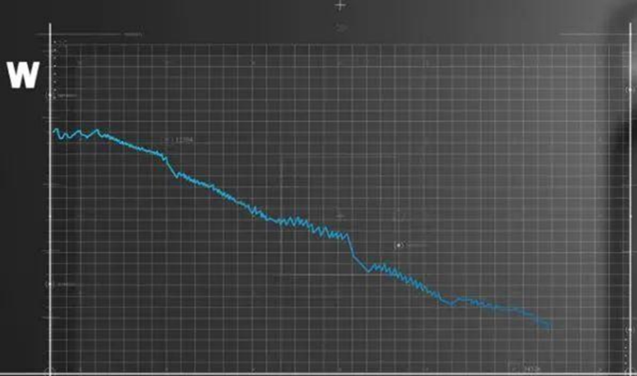
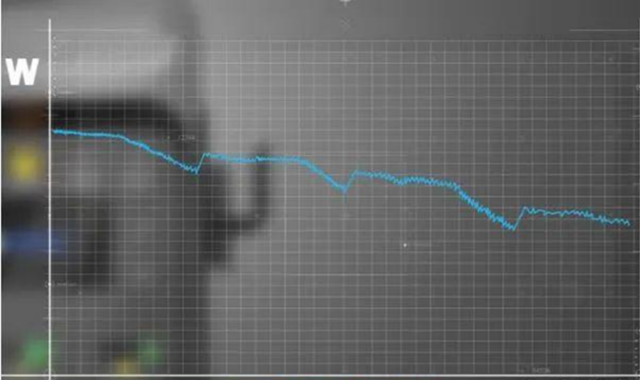
Auto calibrating: stable output power
Left without our auto calibrating - Right with autocalibrating
Why calibrating a welding machine???
This are the key reasons why calibration is important:
Calibrating welding machines is essential to ensure the accuracy and consistency of welds, which leads to better product quality, reduces material waste and rework, maintains safety, and ensures compliance with industry standards. Regular calibration verifies that the machine's settings for parameters like current, voltage, and wire speed are precise, preventing costly errors and ensuring that identical results can be replicated across different welding jobs and machines.
Here are the key reasons why calibration is important:
Ensures Quality and Accuracy:
Calibration ensures that the electrical output and other settings (voltage, current, wire speed) are accurate and deliver the expected heat input, improving weld quality.
Improves Consistency and Reproducibility:
By verifying settings, calibration allows for consistent and identical results from one weld seam to the next, which is crucial for production processes.
Reduces Rework and Material Waste:
Accurate machines lead to fewer errors, preventing costly rework and reducing wasted materials, which improves overall efficiency and lowers production costs.
Enhances Safety:
Poorly calibrated machines can lead to overheating or inadequate shielding, creating hazards like equipment failure, fires, and the release of harmful fumes.
Complies with Industry Standards:
Many industries, especially those involving structural steel and aluminum, require compliance with standards like EN/IEC 60974-14, which specifies the validation and calibration procedures for welding equipment.
Prolongs Equipment Life:
Regular calibration can detect and prevent malfunctions, helping to maintain the operational reliability and extend the lifespan of the welding equipment.
Supports Process Verification:
For processes requiring precise parameters, calibration is necessary to create a reliable standard and verify that the welding procedure is being performed correctly.
The Role of Welding Machine Certification in Quality Assurance
There’s more to welding machine maintenance than passing the calibration test once. Certified welders (CW) in the industry must calibrate their equipment routinely. The quality assurance process for welded products is detailed by the ISO 9000 series and the EN ISO 3834-2. Manufacturers who meet the requirements for welding certification are in a better position to grow their reputation and build trust with customers.
Ensuring your equipment is in good condition is a commitment. Supporting your equipment with system maintenance by an accredited test facility may cost you time and money. Still, the reward is high-quality equipment that contributes to your company’s long-term success and productivity. Poorly maintained tools are dangerous and can harm your workers and jeopardize your projects. With a dedication to product quality, you can uphold your reputation and keep your customers’ trust.
Now we have solved all these problems for ever: The first and only Autocalibrating Laser Welding Machine: PhotonWeld Master Pro Series!
Why Calibration is Necessary? Accurate calibration guarantees that the welding parameters are within the specified ranges, leading to high-quality and safe welds.
Many industries, such as structural steel (EN 1090) or railways (EN 15085), have strict quality requirements that necessitate calibrated equipment. Regular calibration helps ensure your welding machine performs at its best, maintaining its efficiency and
Ensuring Accuracy
Calibration maintains the accuracy of the welding machine, leading to improved control over weld penetration, heat input, and bead formation.
Reducing Scrap Rates
Accurate machines mean fewer errors in welding, which in turn reduces material waste, lost time and rework, optimizing production efficiency and increases the production output
Preserving Equipment Life & Maintains Equipment Efficiency
Regular calibration can help detect and prevent equipment malfunctions, subsequently increasing its lifespan and operational dependability.
Ensures Quality Welds:
Welding isn't just about making sure you keep two pieces of metal attached.
It's about the precision and accuracy of the weld to make sure that the job will stand the test of time, and perform at its highest.
Compliance with Regulations: Proof Of Care
When you calibrate your equipment, you get a certificate or other documentation to prove that you have done so. This creates a paper trail which is required by some construction companies prior to starting work, and it is a great tool to prove to your potential clients that you take care and pride in your work, safety, and equipment.
Safety Comes First
The safety of the welder should be high on your list when it comes to things you ensure. Using a welding machine that is no longer properly calibrated can result in excessive splatter, and poor beam control, which then has the potential to cause harm. Regular calibration combined with safety checks will keep every safe and happy and keeps the machine functioning at optimal performance.
Welding calibration is regulated by international standards such as the International Standard IEC 60974-14 (pertaining to arc welding equipment) and ISO 17662 (applicable to all welding equipment). These standards mandate annual verification procedures to confirm that equipment output, including voltage and amperage, adheres to required tolerances and is aligned with national or international standards. This verification process is crucial for achieving high-quality and safe welds, particularly for organizations with quality management systems like ISO 9001 or those certified to standards such as EN 1090, which frequently necessitate systematic verification of welding machines.
The quality and safety requirements for obtaining CE certification are becoming increasingly stringent. If you are EN 1090 certified, your equipment must meet additional standards for inspection and validation. Not only are you subject to electrical safety inspections, but all welding equipment must also be validated.
Key Standards
• IEC 60974-14: The principal international standard for the calibration and validation of arc welding equipment, detailing the necessary procedures and tolerances.
• ISO 17662: A more comprehensive international standard that encompasses the calibration, verification, and validation of equipment utilized in welding and related processes.
• ISO 9001: Organizations with ISO 9001-certified quality management systems are typically required to implement a systematic verification system for their welding machines to guarantee consistent product quality.
Calibration Standard of Welding Machines
Significant changes have transpired in the realm of welding machine calibration standards in 2021. The previously applicable guidelines under BS EN 50504:2008 had been replaced by BS EN IEC 60974-14:2018. Now, the market welding machine calibration is still BS EN IEC 60974-14:2018.
Welding equipment not only must undergo calibration and validation, but it will also be subjected to a Machine Compliance Test (MCT), which serves as a critical electrical safety evaluation.
THE DIFFERENCE BETWEEN CALIBRATION AND VALIDATION IN WELDING MACHINES
Welding machines are crucial tools in various industries, ensuring the integrity and strength of welded joints.
To maintain their efficiency and accuracy, two important processes are carried out is calibration and validation. While often used interchangeably, these terms represent difference procedures in ensuring the reliability and precision of welding machines.
Calibration:
Calibration involves adjusting and verifying the accuracy of welding machine settings and parameters against a known standard. It ensures that the machine performs consistently and accurately.
- Process: During calibration, precise measurements and adjustments are made to align the machine’s output with established standards. This may include adjusting power, width, wire feed speed, gas flow rate, etc.
- Purpose: Calibration ensures that the welding machine operates within specified tolerances, minimizing deviations and errors in the welding process.
- Frequency: Calibration is typically performed regularly, according to manufacturer recommendations or industry standards, to maintain the machine’s accuracy over time.
Validation:
Validation assesses the overall performance and capability of the welding machine to consistently produce welds that meet predetermined quality criteria.
Process: Validation involves testing the welding machine under various operating conditions and evaluating its ability to produce welds that meet
- specified quality standards. This may include testing weld bead appearance, penetration depth, strength of the welding machines.
- Purpose: Validation ensures that the welding machine is capable of consistently producing welds of acceptable quality, meeting the requirements of relevant codes, standards, or customer specifications and provide certificates.
- Frequency: Validation is typically conducted initially upon installation or after significant modifications to the machine. Periodic revalidation may also be necessary to ensure continued compliance with quality standards of the welding machines.