

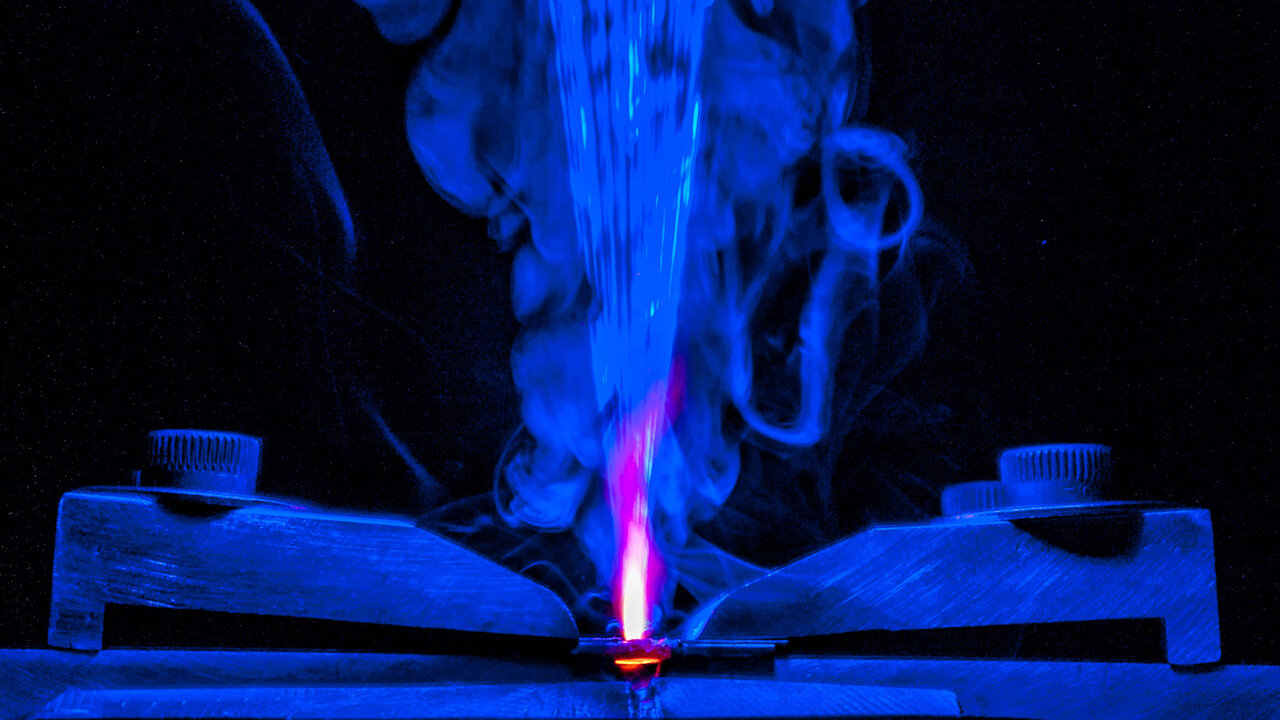
Laser Welding Magnesium Alloys
Magnesium alloys are highly valuable due to their high density and low weight.
Magnesium is the lightest structural metal, often found in industries such as aerospace or automotive, where we also encounter laser welding.
Laser welding magnesium alloys is quite common in the automotive industry, but it can be challenging.

Magnesium and its alloys have a relatively low boiling point. While that characteristic allows low-powered lasers to melt and fuse the pieces, overheating can cause various issues.
Magnesium boiling can cause significant evaporation of alloying elements and spatter. Spatter affects the quality of the welds, while the lack of alloying elements can compromise the structural integrity.
Rapid evaporation can also cause instability. Inexperienced welders can have a hard time controlling the weld pool and keyhole, leading to various defects. Among others, porosity, cracking, or oxidation are common in magnesium laser welding.
To deal with these issues, welders need careful attention to process parameters and material characteristics. Heat control parameters, including pulse or laser modulation, can be highly beneficial. You also shouldn't disregard other parameters such as laser power, welding speed, spot size, and focal position.

Laser welding magnesium alloys offers deep, narrow welds with minimal distortion due to low heat input.
It is increasingly used in automotive and aerospace manufacturing to reduce weight.
Key challenges include high volatility, porosity, and oxidation.
Proper shielding gas and precise parameter control are vital for success.
Key Technical Considerations
Evaporative Loss: Magnesium has a relatively low boiling point (1091 °C) compared to other structural metals. Excessive laser power can cause the volatile vaporization of alloying elements like zinc or aluminum.
Porosity: Keyhole instability during high-speed laser welding often traps gas bubbles in the solidifying weld pool, forming pores. Using an optimized laser speed and weaving (oscillation) helps gases escape
Oxidation: Molten magnesium reacts vigorously with oxygen and nitrogen, leading to embrittlement. A continuous, high-flow shielding gas (typically Argon or Helium) must be used on both the top and root of the weld.
Hot Cracking: Certain alloys, particularly those high in zinc (like ZK-series alloys), are highly susceptible to solidification cracking. Preheating the base metal (typically between 150 °C and 250 °C) and utilizing filler metals can mitigate this.
Standard Processing Parameters
Laser Power: 1.0 kW – 3.0 kW (depending on material thickness; higher power requires higher speeds).
Welding Speed: 2.0 m/min – 6.0 m/min. Faster speeds lower the heat input but require precise fit-up tolerances.
Shielding Gas Flow Rate: 15 L/min – 25 L/min (Argon or Helium) to effectively shield the molten pool from atmospheric contamination.