

Overcoming Traditional Limitations of TIG and/or MIG Welding in automotive repair
Replace any MIG or TIG welder by our PhotonWeld Lite-Pro-S-BW automotive laser welding machine!
For decades, MIG (Metal Inert Gas) and TIG (Tungsten Inert Gas) have been the standard.
However, MIG often leaves bulky weld beads that require aggressive grinding. TIG requires immense skill to avoid burning through thin auto panels.
A PhotonWeld Pro Handheld Laser Welder bridges the gap, offering the speed of MIG and the visual perfection of TIG without the severe drawbacks of either.
With a PhotonWeld Lite Pro-BW Handheld Laser Welder, the operator can seamlessly join high-strength steel, aluminum, and even dissimilar metals commonly found in modern car frames.
The precise control over power and frequency allows users to adjust the machine for delicate exterior cosmetic panels or thicker structural chassis components with a simple touch of a screen.
How Automotive Repair Shops are Revolutionizing Body Work with Laser Welding
Every automotive repair shop owner knows the struggle of dealing with thin sheet metal panels. Traditional welding methods often result in excessive heat buildup, causing thin car body panels to warp or buckle. This distortion requires hours of meticulous hammering, filling, and sanding to correct.
Furthermore, finding highly skilled technicians who can flawlessly manipulate traditional torches is becoming increasingly difficult. These pain points drain productivity and narrow your profit margins.
The definitive solution to these persistent industry problems is the PhotonWeld Lite-Pro-BW Automotive Handheld Laser Welder.
This advanced technology is no longer restricted to multi-million-dollar manufacturing plants. Today, a PhotonWeld Handheld Laser Welder is accessible and highly practical for independent automotive body shops, collision centers, and restoration garages. By adopting this tool, shop managers can drastically cut down on post-weld processing time.
When you introduce a PhotonWeld-Lite-Pro Handheld Laser Welder into your daily workflow, you instantly reduce the dreaded heat-affected zone (HAZ). This means panels stay straight, paint prep time is minimized, and vehicle turnaround times drop significantly.


The Advantages of Laser Welding in Auto Repairs The growing adoption of laser welding in the automotive repair industry can be attributed to its numerous advantages:
The Role of Laser Welding in Auto Repairs
Precision
Laser welders can achieve accuracy down to fractions of a millimeter, making them ideal for intricate or delicate repairs.
Minimal Heat Distortion
The concentrated beam generates less heat, reducing the risk of warping or damaging surrounding areas.
Durability
Laser welds are strong and resistant to wear, ensuring long-lasting repairs.
Good material adaptability & Versatility
Laser welding technology is suitable for a variety of metal materials, including different types of steel, aluminum alloy, etc. They can work with a wide range of materials, including steel, aluminum, and even dissimilar metals. In automobile manufacturing, in order to reduce the weight of the car body and improve fuel economy, the use of lightweight materials such as aluminum alloy is becoming more and more widespread. Laser welding can well realize the welding between aluminum alloy materials and between aluminum alloy and steel, meeting the demand for material diversification in automobile manufacturing.
High efficiency and high speed
Laser welding is fast and can complete a large amount of welding work in a short time. Repairs are completed faster, with fewer secondary processes required. Compared with traditional welding technology, laser welding can greatly shorten the welding time and improve production efficiency. In the automobile production line, this means that more cars can be produced per unit time to meet the market’s growing demand for cars. For example, in the welding process of the car chassis, laser welding technology can increase the welding speed several times, effectively improving the efficiency of the entire production line.
Reduce production costs
Although the initial investment of laser welding equipment is relatively high, in the long run, due to its efficient production speed, high-quality welding effect and low scrap rate, it can effectively reduce the overall cost of automobile production. High-precision welding reduces the subsequent grinding and trimming of the welding parts, saving manpower and time costs. Moreover, good welding quality reduces the product scrap rate caused by welding defects, further saving production costs.
Challenges
Due to the small laser focus spot size and narrow weld seam, laser welding has high requirements for workpiece assembly accuracy. The position of the welded parts must be very accurate, requiring that the position of the beam on the workpiece cannot have obvious offset and must be within the focusing range of the laser beam. If the workpiece assembly accuracy or beam positioning accuracy does not meet the requirements, welding defects are very likely to occur.
The laser fill welding process is more difficult to control unless using adding material with a good wire feeder. Laser fill welding is a fusion welding process, where the focused light spot is irradiated on the workpiece and the welding wire respectively. The molten pool is small, and it is very important to accurately control the relative position of the light so that the continuously fed welding wire can be melted evenly. The weld solidifies quickly and may have porosity and embrittlement defects if not done with knowledge or proper laser welding training.

Laser welding is making waves in the automotive repair industry for several reasons. From repairing damaged components to restoring classic vehicles, this technology offers solutions that were previously impossible or impractical with traditional methods.
Revolutionizing Auto Repairs: How PhotonWeld Lite ProS-BW Series Laser Welders Are Changing the Game!
1. Precision Repairs for Modern Vehicles
Modern vehicles are built with advanced materials and intricate designs that demand a high level of precision during repairs. Traditional welding methods often struggle to meet these requirements, as they can cause warping or damage to surrounding areas due to excessive heat. Laser welders, on the other hand, offer unparalleled accuracy. Their concentrated beams allow for precise repairs without affecting adjacent components, making them ideal for working on thin panels, intricate joints, or high-strength materials.
For example, laser welding is particularly effective for repairing aluminum body panels, which are increasingly common in modern cars due to their lightweight properties. Traditional welding methods can easily warp aluminum, but laser welders can join or repair these panels with minimal heat distortion, ensuring a flawless finish.
2. Restoring Classic Cars
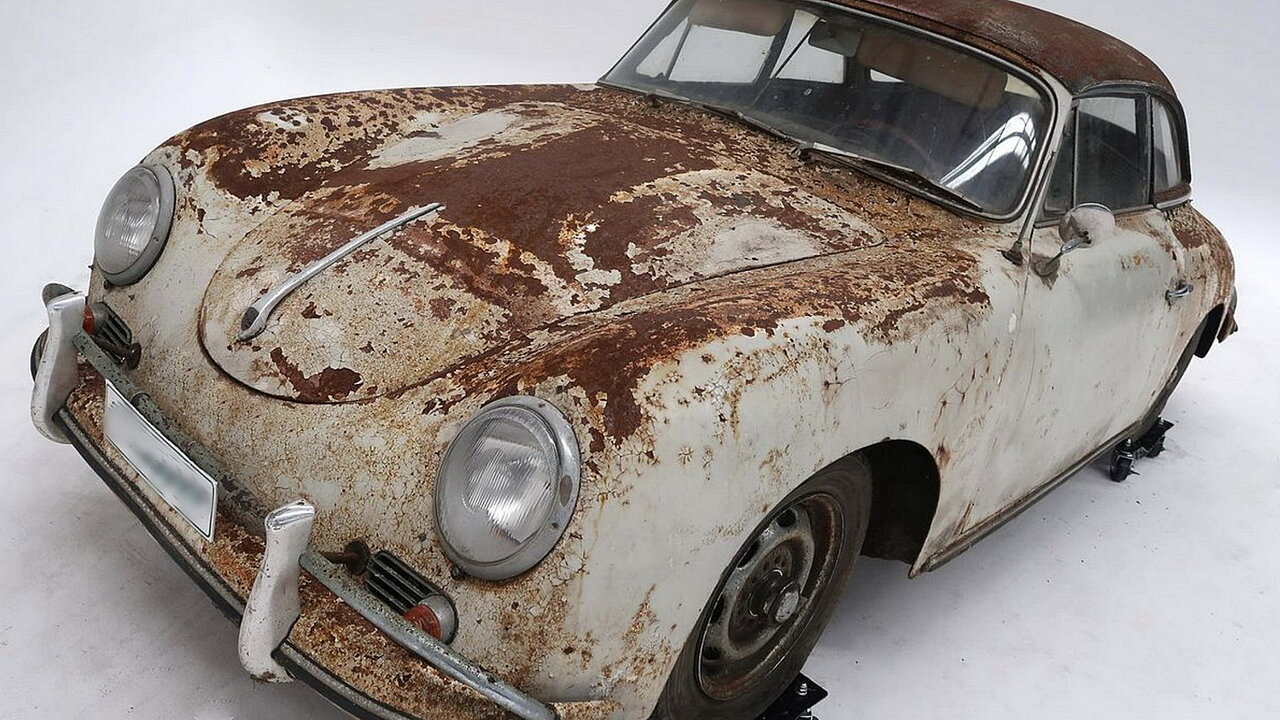
For classic car enthusiasts, maintaining the original integrity of a vehicle is paramount. Restoring vintage cars often involves repairing rusted or damaged parts, which can be a delicate process. Traditional welding methods may compromise the authenticity of the vehicle by requiring extensive grinding, filling, or repainting.
Laser welding offers a solution by enabling precise, localized repairs that preserve the original material as much as possible. For instance, a rusted section of a fender can be repaired with a laser welder without affecting the surrounding metal, reducing the need for additional bodywork. This level of precision is invaluable for collectors and restorers who want to maintain the historical value of their vehicles.
3. Enhancing the Repair of Electric Vehicles (EVs)
The rise of electric vehicles has introduced new challenges for the automotive repair industry. EVs often feature lightweight materials, such as aluminum and carbon fiber, as well as high-voltage battery systems that require careful handling. Laser welding is uniquely suited to address these challenges.
For example, laser welders can be used to repair or assemble battery enclosures, which are typically made of aluminum or other lightweight materials. The precision of laser welding ensures that these components are sealed properly, preventing issues like water ingress or thermal leakage. Additionally, the minimal heat generated by laser welding reduces the risk of damaging sensitive electronic components, making it a safer option for EV repairs.
4. Reducing Repair Time and Costs
Time is money in the automotive repair industry, and laser welding offers significant time-saving benefits. The precision and efficiency of laser welders allow technicians to complete repairs more quickly than traditional methods. For instance, a cracked engine component that might take hours to repair with traditional welding can often be fixed in a fraction of the time using a laser welder.
Moreover, laser welding reduces the need for secondary processes like grinding, sanding, or repainting, further cutting down on repair time and costs. This efficiency benefits both repair shops and customers, as vehicles can be returned to the road faster and at a lower overall cost.
5. Improved Safety and Durability
Safety is a top priority in auto repairs, and laser welding contributes to safer, more durable repairs. The precision of laser welding ensures that joints are strong and reliable, reducing the risk of failure over time. This is particularly important for critical components like suspension mounts, engine brackets, or structural reinforcements.
Additionally, laser welding minimizes the introduction of impurities into the weld, which can weaken the joint. The result is a cleaner, stronger weld that meets or exceeds industry standards for safety and performance.

Laser Welding: already A Reality in Auto Body Shops
Laser welding: Feasibility in Collision Repair is proven
Recent trials demonstrated that handheld laser systems can produce welds comparable, or even better to original OEM strength when proper fit-up and parameter control are maintained. Weld samples on 1000 MPa steel submitted for industry evaluation ranked among the strongest non-adhesive-bearing samples tested.
Advantages include:
- Speed and precision.
- Reduced heat distortion compared to traditional arc welding.
- High visual quality of finished welds.
- much less grinding
Challenges include:
- Zinc-coated steels create off-gassing and fume hazards.
- Parameter sensitivity requires skilled operation.
- Strict safety protocols are essential to prevent injury and equipment damage.
Training is critical. Operators must master parameter settings, fit-up techniques and know the safety standards.
This is not a “plug-and-play” process — precision and consistency depend on operator skill.

Why Auto Body Shops Are Switching to Fiber Laser Welding
Handheld Fiber Laser Welders for Auto Body Shops: It Is definitively Worth the Investment!
Auto body repair has relied on MIG welders and resistance spot welders for decades. Both get the job done, but both come with trade-offs that cost shops time, materials, and margin. MIG welding on thin-gauge sheetmetal produces spatter, burn-through risk, and heat distortion that requires straightening and finishing downstream. Spot welders handle lap joints well but offer zero flexibility for butt joints, edge welds, or patch panel work.
Our Handheld PhotonWeld Lite-Pro-S-BW Series fiber laser welders solve those problems. They deliver focused energy with a heat-affected zone (HAZ) up to 85% smaller than MIG, which means less warping on a 0
0,8 mm and thinner panels. Weld speed is 3-6 times faster than TIG on the same joint types. And because the weld bead is clean and consistent, many joints require zero post-weld grinding.
For auto body shops billing by the hour or managing tight cycle times on insurance work, that combination of speed, precision, and reduced rework translates directly to higher throughput and better margins.

Real Results: What Auto Body Shops Report After Switching
Collision repair shops and restoration facilities that have adopted fiber laser welding consistently report the following outcomes:
60-80% reduction in post-weld grinding time on patch panel and sheetmetal work
Zero burn-through incidents on 0,8 mm and thinner panels (compared to regular occurrences with MIG)
Faster cycle times that allow shops to process more repair orders per week
Cleaner weld aesthetics that reduce filler, primer, and paint consumption
Operator preference once trained, technicians prefer the fiber laser for precision work and resist going back to MIG for thin-gauge applications
Much more ecologic: Drastic less energy consumption (till minus 75%)
Cleaner enviroment: drastic reduction of fume and smoke
The consistent theme is that fiber laser welding does not just match existing processes;
it eliminates downstream steps that have been accepted as necessary for decades.

Common Auto Body Applications for Fiber Laser Welders
Patch Panel Welding
Replacing rusted or damaged sections of quarter panels, rocker panels, and floor pans is core auto body work. Fiber laser welders excel here because they can produce narrow, low-distortion butt joints on 18-22 gauge steel without burning through. The result is a weld that sits nearly flush with the surrounding panel, reducing filler and finishing time significantly. Shops report cutting patch panel weld-and-finish time by 40-60% after switching from MIG.
Rust Repair and Metal Replacement
Rust repair on classic cars, trucks, and daily drivers demands precision. The surrounding metal is often thin, weakened, or irregular. A fiber laser welder’s adjustable power settings let the operator dial down energy for fragile areas and scale up for thicker sections, all without changing equipment or consumables. Wire feed capability on models adds filler material on the fly to bridge gaps where corroded metal was removed.
Classic Car Restoration
Restoration shops working on high-value vehicles cannot afford visible heat marks, warped panels, or heavy grind lines. Fiber laser welding produces an aesthetic bead that preserves panel geometry. For concours-level restorations where panel gaps, body lines, and surface finish are judged critically, a clean weld that needs minimal finishing is a competitive advantage. Operators can weld thin stainless trim, chrome-moly tubing, and mild steel body panels with one machine.
Frame and Structural Reinforcement
While structural collision repair still follows OEM-specified procedures (often requiring squeeze-type resistance spot welders for specific joints WHICH CAN BE DONE NOW ALSO BY LASER WELDER - See our model O ) , fiber laser welders are increasingly used for structural reinforcements, subframe gusseting, and bracket fabrication. The deep penetration and consistent fusion of a fiber laser weld provides strength equivalent to or exceeding TIG on the same joint, at a fraction of the time.
Exhaust and Custom Fabrication
Auto body shops that offer exhaust work, roll cage fabrication, or custom metalwork alongside collision repair benefit from the fiber laser’s versatility. Welding stainless steel exhaust tubing, mild steel brackets, and aluminum heat shields all happens with the same machine. No gas changes, no wire spool swaps, no process switch between materials.

Safety Considerations for Auto Body Shops with a laser welding machine aquisition!
Fiber laser welders are Class 4 laser devices and require proper safety protocols. For auto body shops, the key requirements include:
- Laser safety glasses rated for the specific wavelength (typically 1064nm for fiber lasers) with an appropriate optical density ( minimal (LB) OD 6+)
- Enclosed or controlled welding areas to prevent accidental laser exposure to other shop personnel
- Fume extraction for welding coated metals (galvanized, primed, or painted panels must be stripped before welding)
- Training for all operators on laser safety protocols and emergency procedures
- Operator training based on practical welding course
Lasermach provides safety equipment and guidelines with every machine purchase, including operator training resources to ensure your shop meets compliance requirements from day one.