


Laser Welding Highly Reflective Metals like Copper and Brass
If you walk into any metal fabrication shop and ask the veteran welders which metal they hate working with the most, you will almost always get the same answer: ” The Red Metals.”
Copper and brass are notorious.
They are the nightmares of the thermal joining world.
Try to TIG weld a thick copper busbar, and the heat runs away so fast that you end up melting your torch before you melt the workpiece.
Try to MIG weld brass, and the zinc boils out, popping and spitting like a firecracker, leaving you with a porous, weak mess.
For years, the industry accepted that welding these metals was slow, difficult, and required highly specialized skill.
But with the rise of the Electric Vehicle (EV) industry, renewable energy, and advanced electronics, the demand for joining copper has exploded.
We cannot rely anymore on slow soldering or brazing. We need speed. We need strength.
The ultimate solution is our PhotonWeld Master-Pro X80 and X100
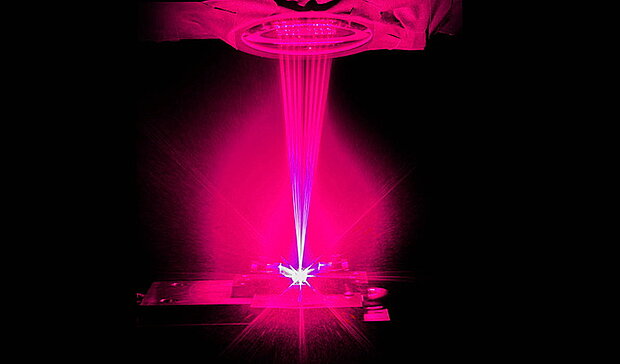
Special laser welding machine for Copper and other high reflective materials.
Industrial end-users as well as consumers demand for reliable and cost efficient weld seams in products.
Welding of copper with an infrared fiber laser is still a challenge for current state-of-the-art laser. The high reflectivity leads to irregularities at the beginning of the process and the low surface tension and viscosity of copper causes a high sensitivity for sputter ejections especially at low and mid welding speeds. Unfortunately welding copper with near infrared wavelength can be challenging due to material properties in solid phase, such as the low absorption in a range of few percent and the relative high heat conductivity. These properties influence spatter ejections as well as random variation in penetration depth due to instable in-coupling of the laser power. To overcome these challenges different techniques have been used in our Special laser welding machine for Copper and other high reflective materials.
Our Self-develloped Brilliant single mode laser sources provide extremely high power densities for a reliable coupling into high reflective materials and proper welding process. Our suplementary solution aside our high brightness laser source, to avoid sputter ejections is a perfectly controlled oscillation of the laser beam, the so called wobbling. Wobbling leads to a high beam speed at a low feed rate resulting in a stable key hole and a strong reduction of sputter at low welding speeds. Thereby the wobbling gives the opportunity to change the shape of the weld seam in a wide range. And our anti porosity system reduce drastically the creation of porosity which initiates the sputter ejections.
Industrial end-users as well as consumers demand for reliable and cost efficient weld seams in products. Thus formulate the expectation on a widely controllable weld seam behavior in terms of spatter free, homogeneous joint with low electrical resistance.

Lasermach's high power single mode laser sources can reach intensities up to fifty times higher than multimode lasers in comparable power ranges.
The main reasons for the difficulties of copper weld seams are the absorption properties of copper. In the solid state copper absorbs less than 4 % of the beam energy! Thereby a high intensity is needed to liquefy, evaporate and open a keyhole in copper to start the deep penetration welding process. This high laser intensity can only be achieved by the best beam quality. Lasermach's high power single mode laser sources can reach intensities up to fifty times higher than multimode lasers in comparable power ranges. These high densities lead to immediate and stable absorption from the beginning of the weld seams and to a stable weld.
Liquid Copper has low surface tension and very low viscosity compared to other metals which leads to an unstable weld pool and a high vulnerability to sputter ejections at low welding speeds due to overheating of the melt pool. With increased welding speed or precise controlled wobble, all these problems can be overcome at the expenses of the penetration depth. Our Brilliant high power fiber lasers provide the needed intensity to ensure a reliable coupling into the copper. Due to the fast coupling, high absorption of the keyhole and the stability against back reflection, these lasers overcome the issue of instable Copper welds known from the past. With additional use of the precise controlled wobbling it is possible to achieve sputter-free weld seams even at low speeds and independent on the surface of the material.
Single-mode Laser with Wobble Welding
Ideal for copper welding
Technological Advantages
A smaller fiber core diameter allows for higher power density, enabling instant keyhole coupling and formation.
The wobble mode distributes energy more evenly, maintaining a stable keyhole even at relatively low linear welding speeds, effectively minimizing the porosity and spatter caused by unstable energy coupling and overheating.

976 nm High-Brightness Pumping Technology
the copper welding initiation threshold (≥120 MW/cm²)
- Electro-optical conversion efficiency >43% (competitors' 915 nm pumping <32%)
- 3 kW @ 20 μm core diameter, energy density reaching ~4×10⁹ W/cm², far exceeding the copper welding initiation threshold (≥120 MW/cm²)
- Shorter active fiber length reduces nonlinear effects and improves beam quality
AI Welding Consistency System
- Laser power fluctuation <±1.5% (industry standard ±3–5%; xx Laser's precision is 2× ahead)
- Modulation response time <10 μs

Copper welding a piece of cake for our PhotonWeld Master-Pro
Lasermach's high power single mode laser sources with ultra thin 14 or 20µm fibers make it happen!
Laser Welding of Copper: Surface Preparation – Don’t Skip This
You might get away with welding oily steel. You will not get away with dirty copper.
Oil, grease, and oxide layers interfere with the delicate absorption physics of laser welding copper.
Degrease: Use Acetone or Alcohol to remove all stamping oils.
De-Oxidize: If the copper looks brown or green, it has an oxide layer. While oxides actually absorb laser light well, they cause inclusions in the weld. Scotch-Brite, wire brush the weld area until it is shiny bright pink or use one of our superb laser cleaners (www.photonclean.com)
Fit-Up: Because copper conducts heat so well, gaps are disastrous. If there is a 0.5mm gap, the heat will not bridge it; it will just melt the edges back. Zero-gap fit-up is essential for high-quality laser welding copper.