

Webpage under construction

976nm: The new Green Number
Our EcoLener 976nm pumped high efficient fiber laser Sources achieves 85% optical efficiency with a Wall-Plug efficiency of almost 50%, which is much higher than any other wobble laser Welding Machine
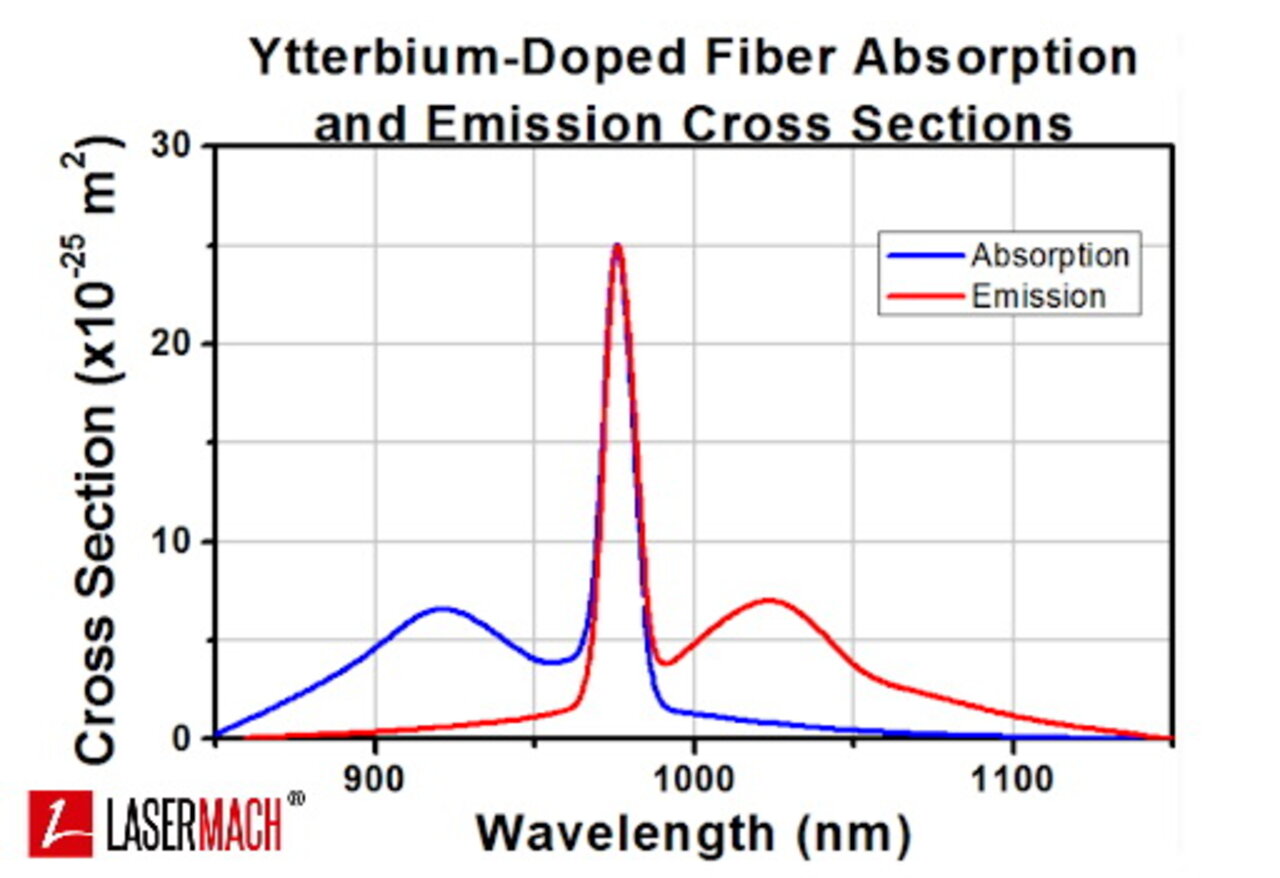
976nm pumped fiber laser achieves 85% optical efficiency
The 976nm pumping solution has obvious advantages and will gradually become the mainstream of the market.
The current laser welder equipment in the market are mainly water-cooled solutions, that is, heat is taken out of the laser through the external circulation of the chiller. Lasermach's PhotonWeld focuses on continuous discussion and innovation based on 976nm technology, combined with the high photoelectric conversion efficiency of 976nm Creatively solved the problem of air-cooled refrigeration capacity, launched the air-cooled 976nm technology for the first time in the industry, solved the power consumption and portability issues, and once again lead the technical development direction of fiber lasers.
The 976nm semiconductor laser is applied to the high-power fiber laser in the industrial market. Due to the elimination of the nonlinear effect of the fiber, nearly 85% of the light-to-light conversion efficiency is achieved, the whole system is weakly affected by the ambient temperature, and the reliability of the semiconductor laser itself is higher. Many advantages will be more and more valued and welcomed. In the long term, with the scale application of the 976nm fiber-coupled module, it is believed that the product technology level will continue to improve, and low-cost 976nm wavelength locking on components will become a reality.
Fiber laser basic principle
Fiber lasers are composed of three basic elements: pump source, gain medium, and resonant cavity. The pump source is generally a semiconductor laser diode (LD), the gain medium is a rare-earth doped fiber (usually ytterbium-doped fiber, YDF), and the resonant cavity is generally composed of a grating and a gain fiber.
The pump light generated by multiple laser diodes enters the resonant cavity through the forward and backward beam combiners, and the gain fiber forms a particle number reversal and generates radiation after absorbing the pump light, and the resulting radiation is amplified by the excitation and forms a stable laser output through the backward beam combiners.
Basic structure of resonant cavity : Fiber laser resonant cavity mainly has three parts: high-reflection grating, ytterbium-doped fiber, and low-reflection fiber grating.
The basic structure of ytterbium-doped optical fiber is shown in the figure, from the inside to the outside of the core, the inner cladding, the outer cladding and the coating layer. The core is doped with the rare earth element "ytterbium". Pump light is injected into the inner cladding layer repeatedly through the core, absorbed by the ytterbium ion, which is converted into a 1070 nm fiber laser.
The grating in the resonant cavity structure not only plays the role of positive feedback but also the role of mode selection. Photons are reflected back and forth between the two gratings and repeatedly pass through the gain medium, each time they pass through, new photons are excited, and eventually, the beam energy becomes larger and larger. Only light of a specific wavelength and direction can be output from the low-reflection grating.
Our laser welding machines are build around the 976nm pump technology and we use this in our laser welding machines Since 2019 already! The electro-optical conversion efficiency of 976nm pump technology is today between 42%~48% (can be greater than 50% in the near future), which does achieve much higher absorption rates and save 40% of the cost of ytterbium-doped fiber; and the nonlinear effect of this technology is smaller. Based on this, it can achieve single laser peaks with 5kw and above. Modules replace multi-module lasers, which can also reduce module costs by 10-20%. our 976 nm technology has outstanding power and cost advantages.
In addition, the application of 976nm pump technology is more difficult. At present, only a few lasermachine makers use it and realize the industrial use of this 976nm pump technology.
"Due to the high temperature sensitivity and technical difficulty of 976nm pump technology, most manufacturers are not yet able to fully industrialize it. At present, the mainstream of large-scale industrial applications is the 915nm pump technology route. But 976nm pump technology is expected to gradually become the mainstream technology route for the development of high-power fiber lasers.
PhotonWeld: One of the major pioneers in 976nm laser technology
PhotonWeld standard: 976 nm High-Brightness Pumping Technology
Electro-optical conversion efficiency >46% (competitors' 915 nm pumping <32%)
3 kW @ 20 μm core diameter, energy density reaching ~4×10⁹ W/cm², far exceeding the copper welding initiation threshold (≥120 MW/cm²)
Shorter active fiber length reduces nonlinear effects and improves beam quality
Now,there are no technical barriers to the application of the 976nm pump source to high-power fiber lasers, and the solution has been validated in batches.
Due to the higher light-to-light conversion efficiency in the 976 nm, the laser has less heat rejection, and in fact the system thermal management pressure is smaller.
The difference is that high-power fiber lasers basically use industrial water-cooled machines for forced water circulation refrigeration. Even with non-wavelength-locked 976nm pump sources, the cooling power, temperature control level and cost of existing water-cooled machines have fully met the requirements of fiber lasers. Pump source temperature control requirements. Due to the higher light-to-light conversion efficiency in the 976 nm, the laser has less heat rejection, and in fact the system thermal management pressure is smaller.
After years of application demonstrations at several third parties, it shows that the high-fiber laser in the industrial market uses the non-wavelength-locked 976nm pump source.
There is no technical and cost application obstacle, and the ambient temperature is on the whole system.
The performance impact is weak and controllable, and it has a strong competitive advantage in cost performance.

976nm laser light conversion technology has higher electro-optical conversion
Since the absorption of 976nm is 3 times that of 915nm, it consumes less 976nm pump light to produce the same power of 1070nm laser. The pump light is converted from electrical energy, which means that the use of 976nm pump source, the power consumed is smaller, the photoelectric conversion rate is higher, more energy efficient. In comprehensive analysis, the electro-optical conversion rate of 915nm is about 30%~32%, while the electro-optical conversion rate of 976nm can reach almost than 50% today.
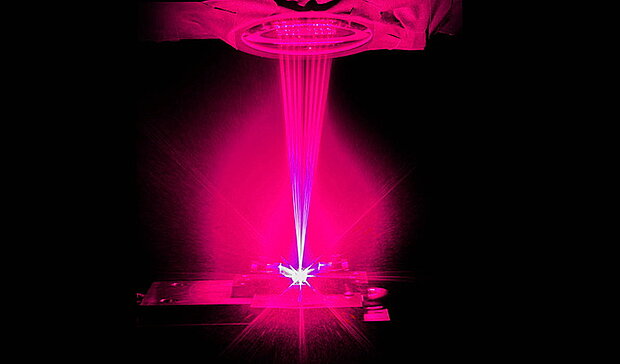
The 976 nm chip is more reliable than the 915 nm chip and has a longer life expectancy!
The 976nm semiconductor laser pump source as a core device also improves the reliability and life expectancy of the fiber laser machine.
As far as the semiconductor laser itself is concerned, the 976 nm chip is more reliable than the 915 nm chip and has a longer life expectancy. Although the GaAs epitaxial crystal material has a slightly better photoelectric conversion efficiency in the 915 nm, the photon energy is lower due to the longer wavelength of 976 nm, and the cavity surface damage threshold of the high-brightness semiconductor laser chip under high current operating conditions is improved. In other words, the 976nm chip has a lower probability of cavity surface optical catastrophic damage (COD) than the 915nm band chip, and the chip itself is more reliable. Therefore, the 976nm semiconductor laser pump source as a core device also improves the reliability and life expectancy of the fiber laser machine.